Growing profiles
Choose how this crop will be grown. Dimensions, spacing and timing belong to the selected profile—not to the species as a single universal value.
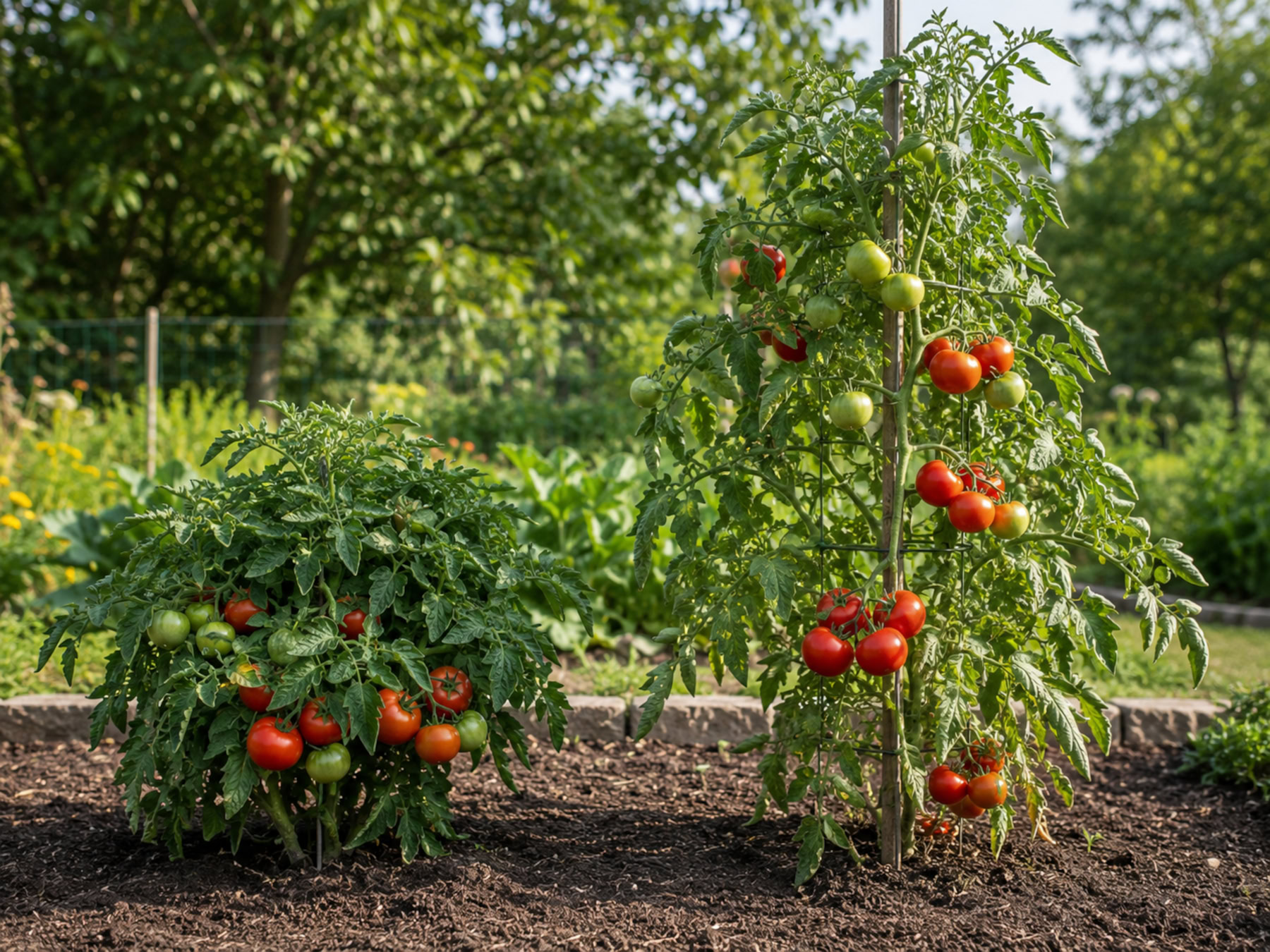
Determinate tomato — caged
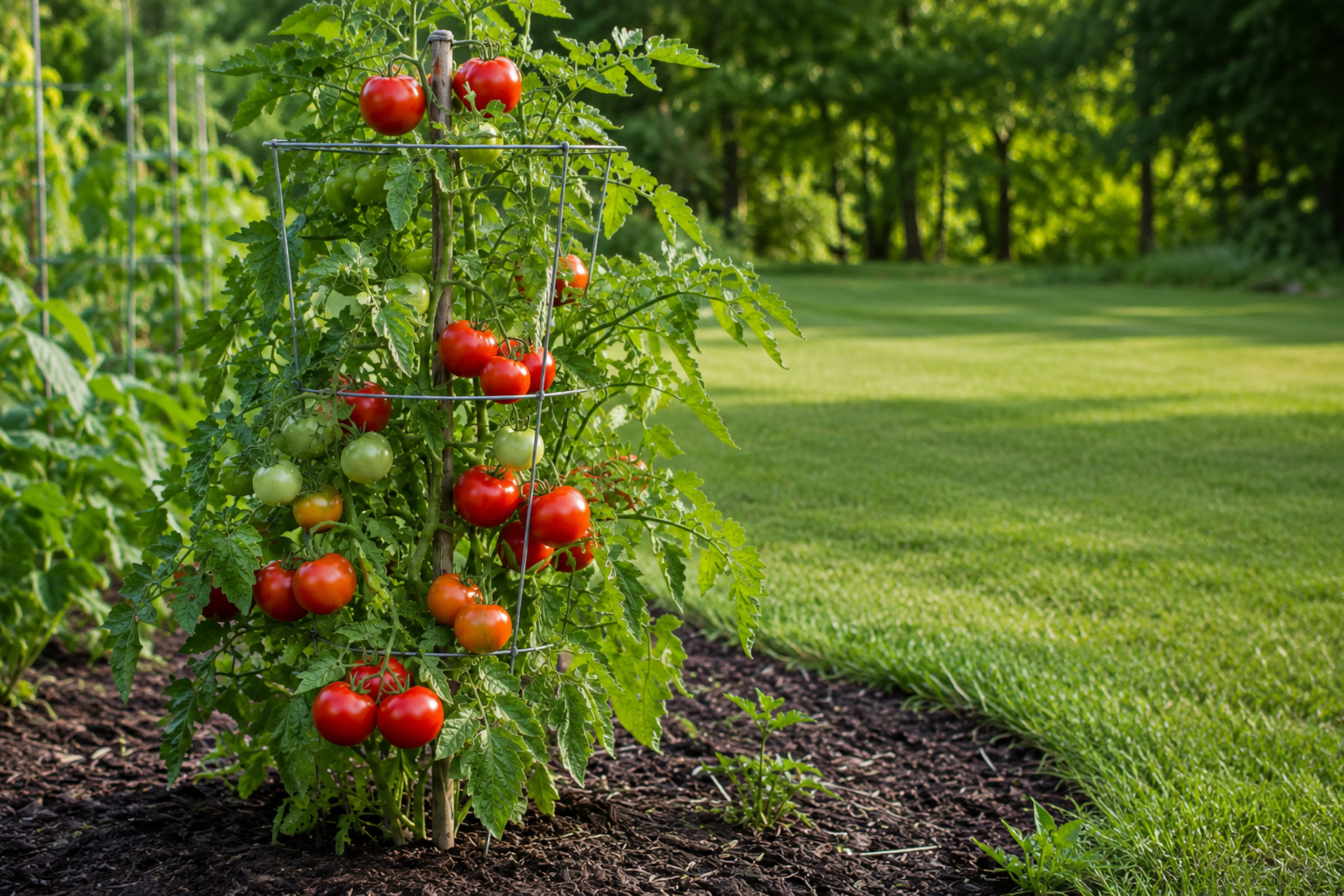
Bush-type tomato that stops extending after terminal flower clusters form; this profile assumes a cage is used.
- Typical mature height
- 24–30 in (61–76 cm) Direct source
- Mature canopy
- 20–31 in (50–80 cm) Editorial synthesisbasis
- Plant spacing
- 24–36 in (61–91 cm) Editorial synthesisbasis
- Row spacing
- 36–48 in (91–122 cm) Editorial synthesisbasis
- Support
- Required for this profile · 35 in (90 cm) minimum Editorial synthesisbasis
- Optional container
- At least 5 US gal (19 L) · 1 plant Editorial synthesisbasis
- Best germination range
- 75–84 °F (24–29 °C) Editorial synthesisbasis
Climate-relative calendar
Frost and transplant rules become local dates when climate data is available. Cultivar maturity and crop condition are never replaced by a fabricated date.
Indeterminate tomato — trellised
Vining tomato that continues growing and fruiting through the season while trained on a trellis or string.
- Typical mature height
- 36–60 in (91–152 cm) Direct source
- Mature canopy
- 18–30 in (45–75 cm) Editorial synthesisbasis
- Plant spacing
- 24–36 in (61–91 cm) Editorial synthesisbasis
- Row spacing
- 36–48 in (91–122 cm) Editorial synthesisbasis
- Support
- Required for this profile · 71 in (180 cm) minimum Editorial synthesisbasis
- Optional container
- At least 10 US gal (38 L) · 1 plant Editorial synthesisbasis
- Best germination range
- 75–84 °F (24–29 °C) Editorial synthesisbasis
Climate-relative calendar
Frost and transplant rules become local dates when climate data is available. Cultivar maturity and crop condition are never replaced by a fabricated date.
Compact container tomato
Dwarf or patio-type tomato grown as one plant per freely draining container.
- Typical mature height
- 12–24 in (30–60 cm) Editorial synthesisbasis
- Mature canopy
- 12–20 in (30–50 cm) Editorial synthesisbasis
- Support
- optional · 18 in (45 cm) minimum Editorial synthesisbasis
- Container volume
- Recommended minimum 5 US gal (19 L) · 1 plant Editorial synthesisbasis
- Container dimensions
- At least 12 in (30 cm) deep · 12 in (30 cm) wide
- Container placement
- One plant per pot; keep mature canopies from overlapping. Ensure excess water can drain freely.
- Best germination range
- 75–84 °F (24–29 °C) Editorial synthesisbasis
Climate-relative calendar
Frost and transplant rules become local dates when climate data is available. Cultivar maturity and crop condition are never replaced by a fabricated date.
Agronomy release agronomy-2026-07-11-r1 · reviewed 2026-07-11 by Gardeningist agronomic research synthesis. Direct-source links indicate close source support; synthesis and planning estimates are labeled separately.
Tomatoes are frost-tender plants grown for their edible fruit. They need warmth, full sun, consistent moisture, and enough space for air to move through the foliage. Choose the cultivar and support system before planting because compact and vining tomatoes require different spacing and pruning.
General tomato requirements
- Light: Full sun, at least 6 hours of direct sunlight; 8 hours is preferable in cool or mild summers.
- Water: Deep, regular watering that keeps the root zone evenly moist without waterlogging it.
- Soil: Fertile, well-drained soil, ideally with a pH of 5.5-7.0.
- Hardiness: Frost tender. Plan according to local frost dates, summer temperatures, and cultivar maturity, not USDA hardiness zones.
- Plant type: Warm-season fruiting vegetable.
- Life cycle: Tender perennial, usually grown as an annual.
- Growth habit: Determinate, semi-determinate, indeterminate, or dwarf.
- Height: About 1 foot to more than 6.5 feet, depending on the cultivar and support system.
- Spacing: About 12-48 inches, depending on growth habit and training method.
- Edible: Ripe fruit.
- Pet safety: Use caution - foliage and unripe fruit are toxic to pets.
These ranges are intentionally cultivar- and system-dependent rather than universal.
Choose the right type and cultivar
Determinate tomatoes stop growing at a limited size and ripen much of their crop over a relatively short period. They are well suited to containers and concentrated harvests. Indeterminate tomatoes continue producing stems, flowers, and fruit until cold weather stops them, so they need sturdy support and provide a longer harvest. Dwarf cultivars are useful for patios and small gardens.
Check the plant label or seed description for days to maturity, mature size, growth habit, and disease-resistance codes. Choose short-season cultivars where summers are cool or brief. Where a disease has been correctly identified before, select resistance or tolerance to that specific disease rather than relying on a general "disease resistant" claim.
When to sow and plant
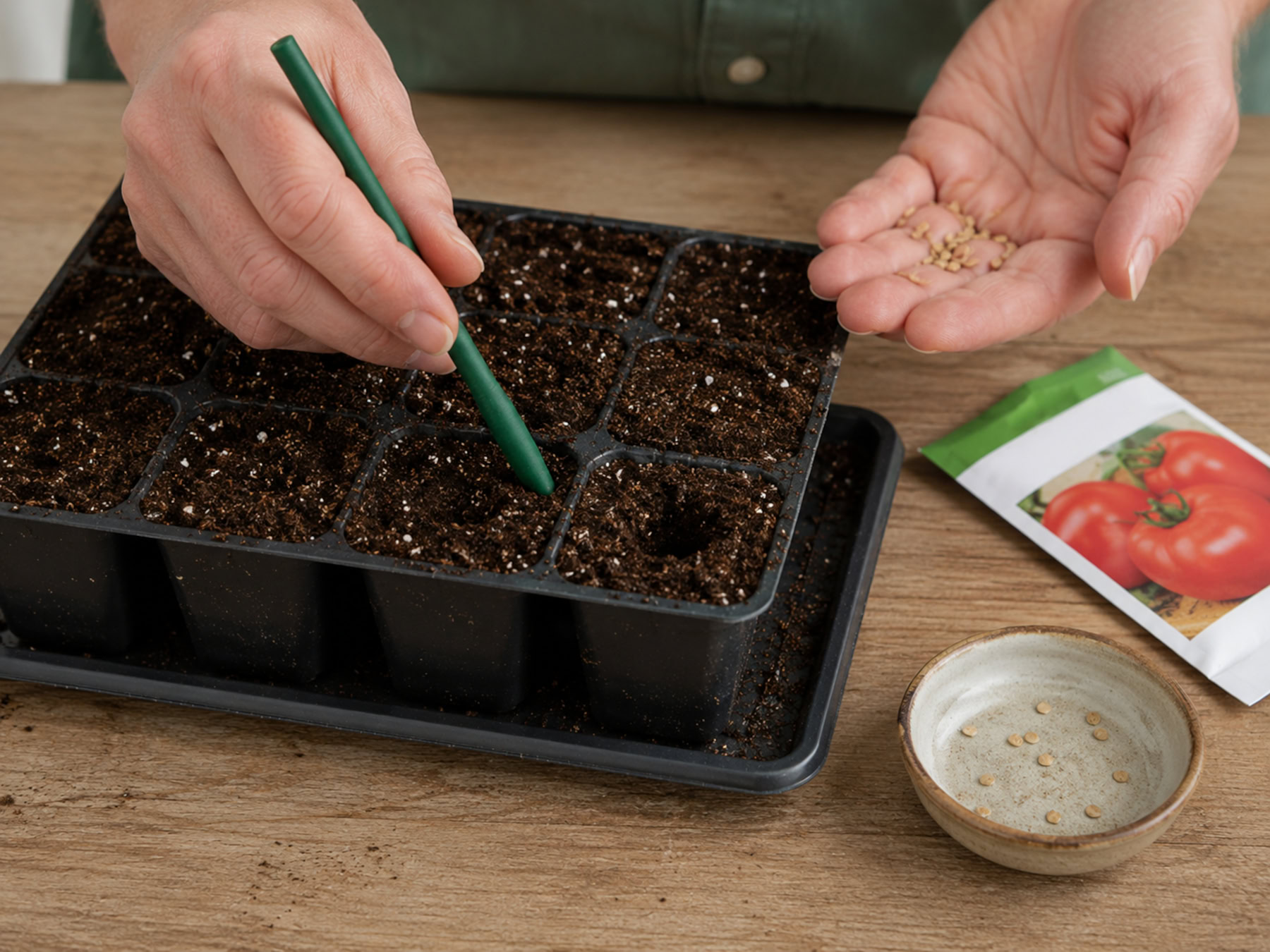
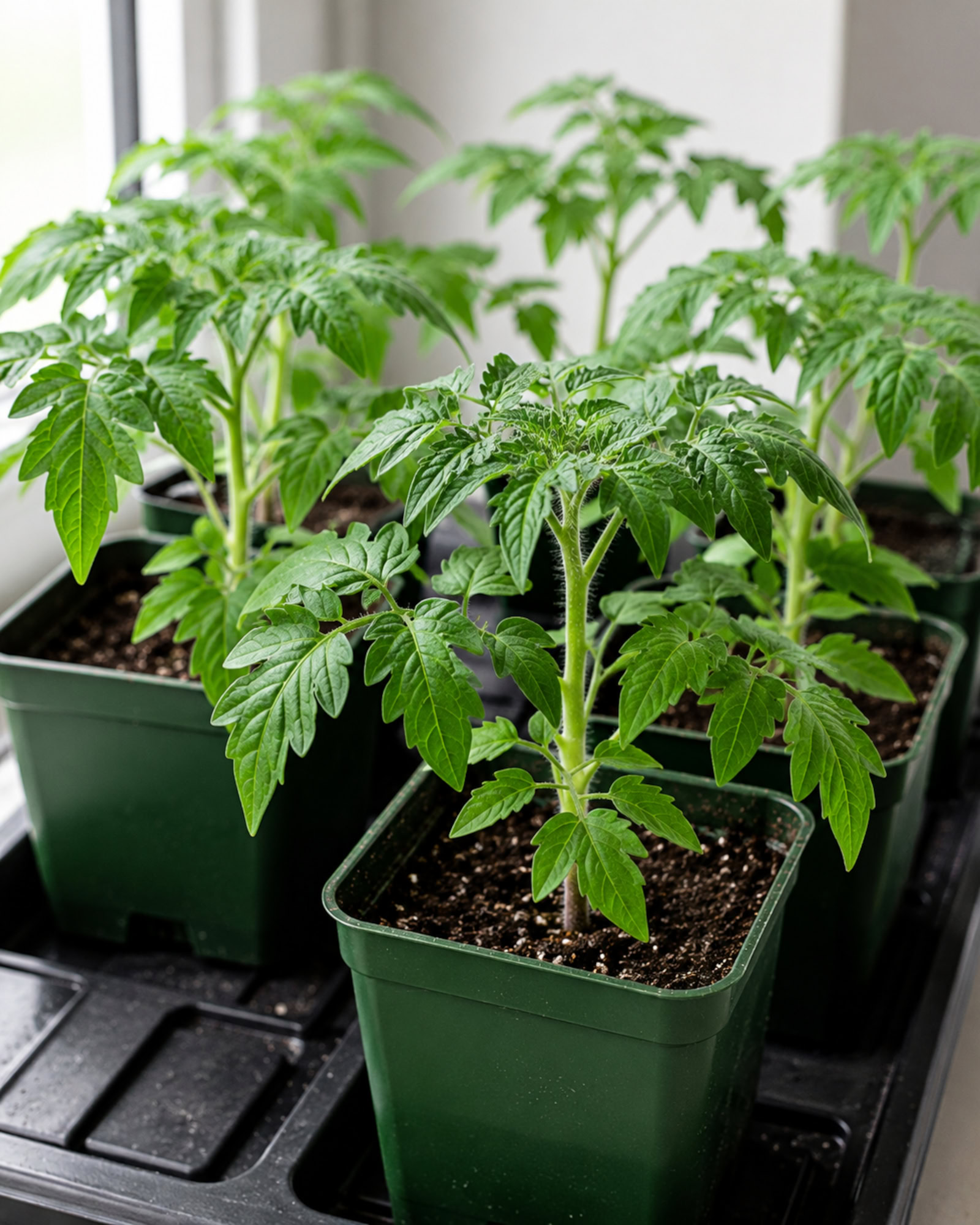
Sow seeds indoors about five to eight weeks before the expected outdoor planting date. Use clean seed-starting mix, keep it moist rather than wet, and provide strong light as soon as the seedlings emerge. Transplant seedlings into larger containers when true leaves have formed and the roots need more space.
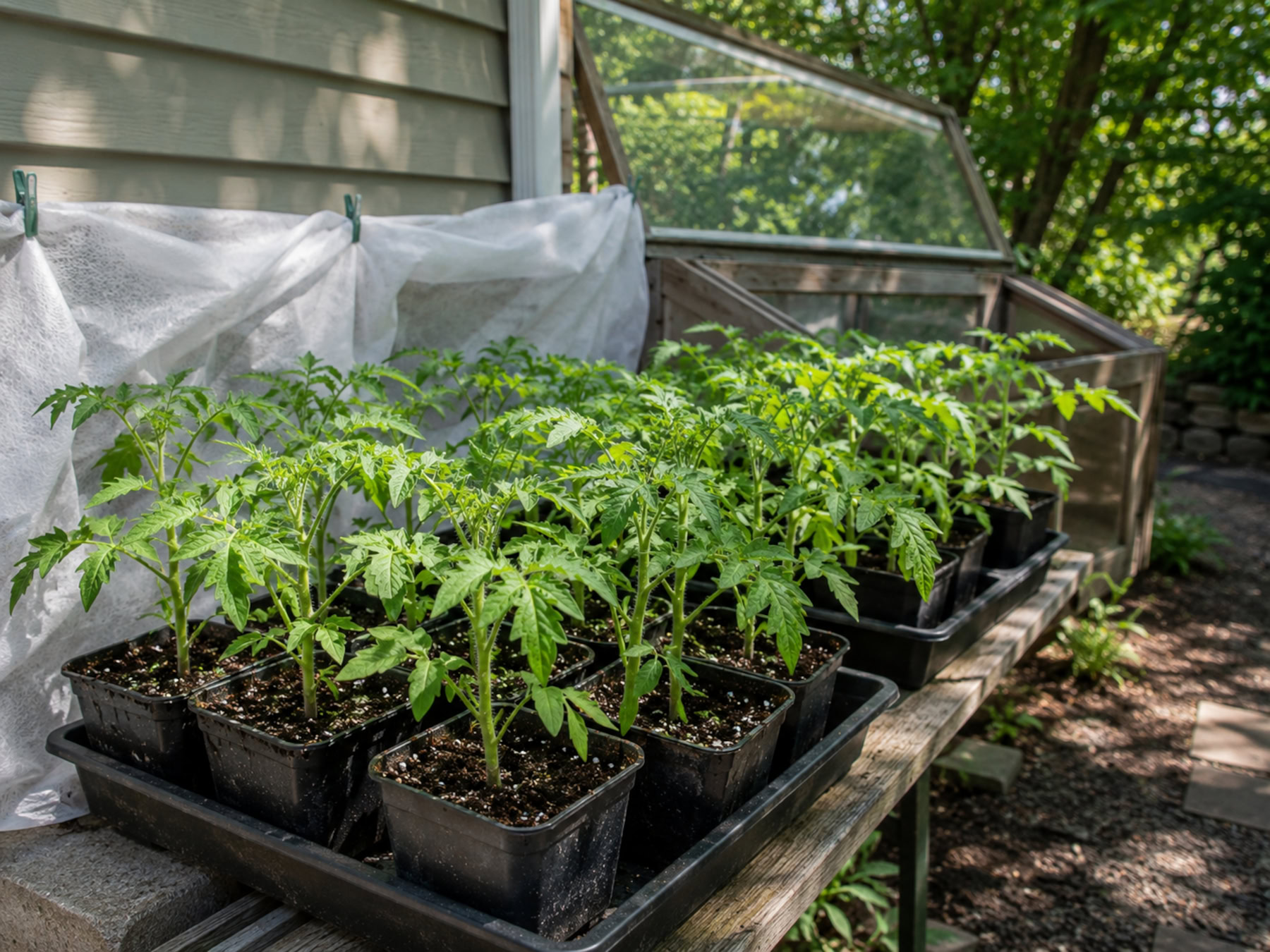
Begin hardening off about two weeks before transplanting. Place the seedlings outside for a few sheltered hours, bring them indoors before temperatures fall, and gradually increase their exposure to sunlight, wind, and outdoor temperatures.
Plant outside after the risk of frost has passed and the soil has warmed. Cold nights can slow growth and reduce early fruit set even when temperatures remain above freezing. Use the cultivar's days-to-maturity figure to determine whether it fits the remaining warm season.
Relative growing calendar
- Five to eight weeks before planting: Sow seeds indoors.
- About two weeks before planting: Begin hardening off.
- After the last frost, when the soil is warm: Transplant outdoors.
- About 55-100 days after transplanting: Begin harvesting, depending on the cultivar.
- Before the first fall frost: Pick ripe and mature-green fruit.
Position, soil, and containers
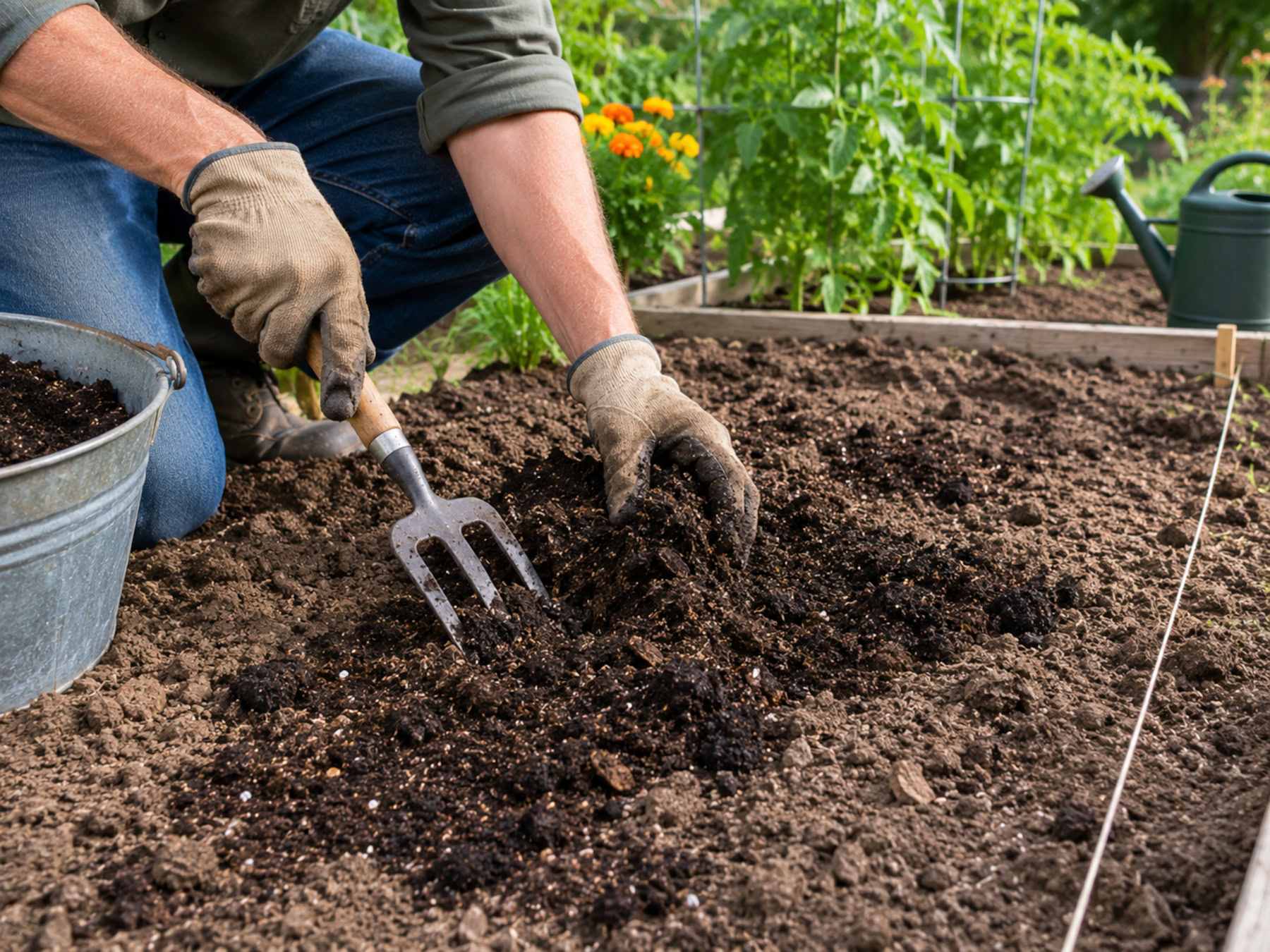
Choose a sunny, sheltered location with at least six hours of direct sunlight. The soil should drain freely while retaining enough moisture to prevent repeated drying. Use a soil test before changing the pH or adding nutrients. Excess nitrogen can produce lush foliage while delaying flowering and fruit development.
Add mature compost to poor soil, but do not use fresh manure around an actively growing crop. Once the soil has warmed, apply organic mulch to reduce evaporation, soil splash, and weed growth.
For containers, grow one plant per pot. Use a container that holds at least 5 gallons for a compact cultivar and a substantially larger container for a full-size indeterminate plant. Fill it with fresh potting mix and make sure excess water can drain freely. Compact determinate or dwarf cultivars are easier to manage in limited root space. Large indeterminate plants require more soil, stronger support, and more frequent watering.
Planting, spacing, and support
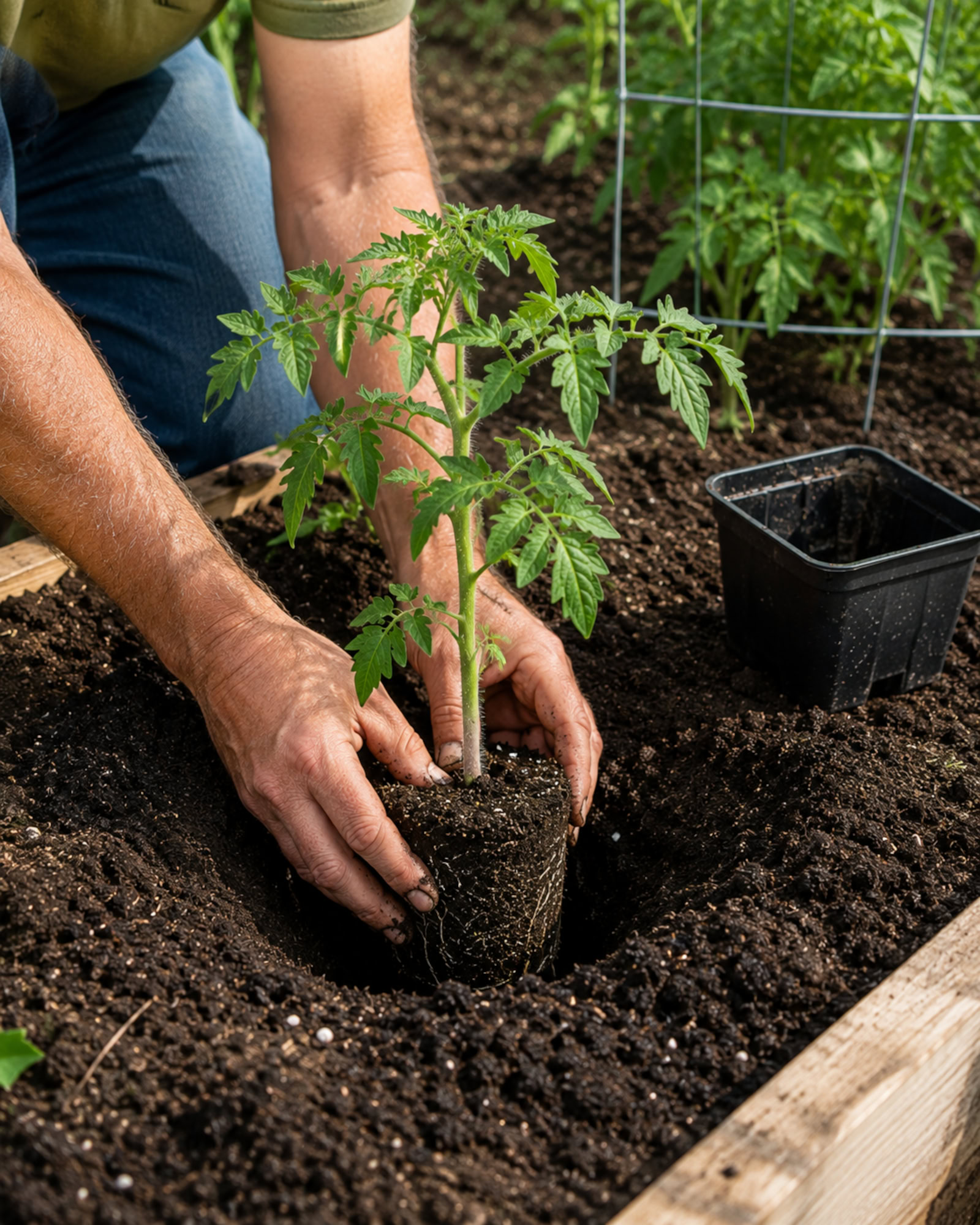
Tomato stems can form roots where they are buried. Set a non-grafted seedling deeper than it grew in its container, leaving the upper healthy leaves above the soil. A leggy seedling can be laid at an angle in a shallow trench. Keep the graft union above the soil on grafted plants.
Match spacing to the plant and support system:
- Dwarf or small patio cultivars: about 12-18 inches.
- Closely trained, staked plants: about 16-24 inches.
- Caged or trellised plants: about 24-36 inches.
- Very vigorous indeterminate plants: up to about 48 inches.
Install stakes, strings, trellises, or cages at planting time. Use soft ties with enough slack to allow the stems to thicken.
Watering, mulching, and fertilizing
Water thoroughly so moisture reaches the root zone, then water again when the soil begins to dry below the surface. In average in-ground conditions, tomatoes often need about 1 inch of water per week, including rainfall. Sandy soil, high temperatures, wind, and containers increase water demand. Check container-grown plants daily during hot weather.
Direct water toward the soil rather than the foliage. Drip irrigation, a soaker hose, or careful hand watering reduces leaf wetness and soil splash. Consistent soil moisture lowers the risk of fruit cracking and blossom-end rot.
Fertilize according to a soil test or the product label. Excess nitrogen can delay fruiting. Container plants usually require regular feeding once fruit begins to develop. Do not add lime, gypsum, calcium sprays, or Epsom salts as a routine treatment for blossom-end rot unless testing shows that an amendment is needed.
Training and pruning
Determinate and dwarf tomatoes normally require little pruning. Heavy shoot removal can reduce the crop and expose fruit to sunscald. Remove damaged, diseased, or soil-touching leaves.
Indeterminate tomatoes can be grown with several stems inside a cage or trained more narrowly along a stake, string, or trellis. Training a plant to one to three stems can improve access and increase individual fruit size, but it also removes fruiting shoots and protective leaf cover. It is an optional training method, not a universal requirement.
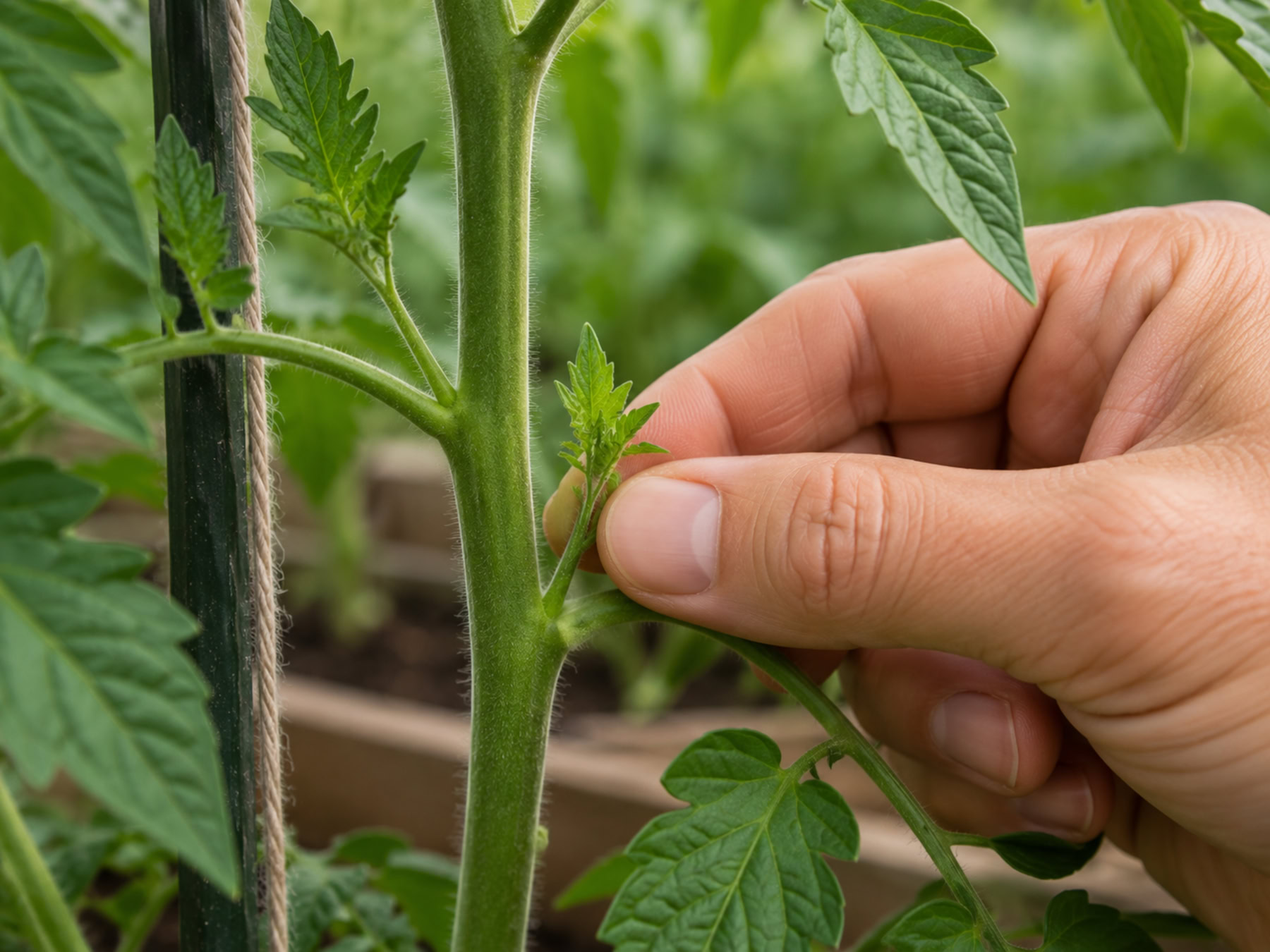
Remove unwanted side shoots while they are small, tie stems loosely, and avoid stripping away large amounts of foliage. Prune when the leaves are dry, and clean tools after cutting diseased tissue.
Pollination and fruit set
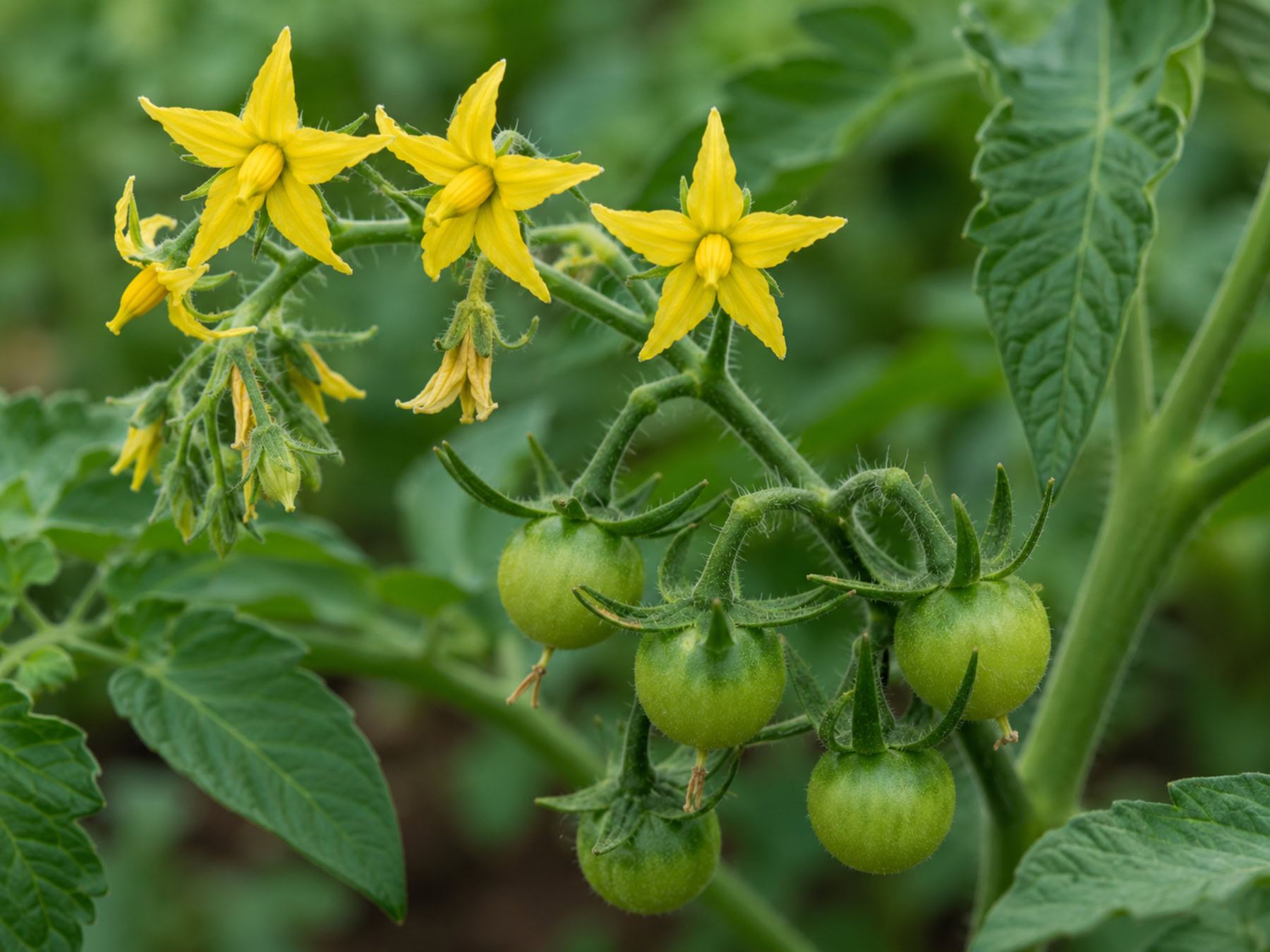
Tomato flowers are self-fertile. Wind and insects usually provide enough movement for pollination outdoors. In a greenhouse, improve ventilation and gently tap flower clusters around midday.
Fruit set may pause when nighttime temperatures fall below about 55 F or daytime temperatures reach about 90 F. Keep plants watered, ventilate protected growing areas, and wait for milder conditions rather than applying additional fertilizer.
Harvest and storage
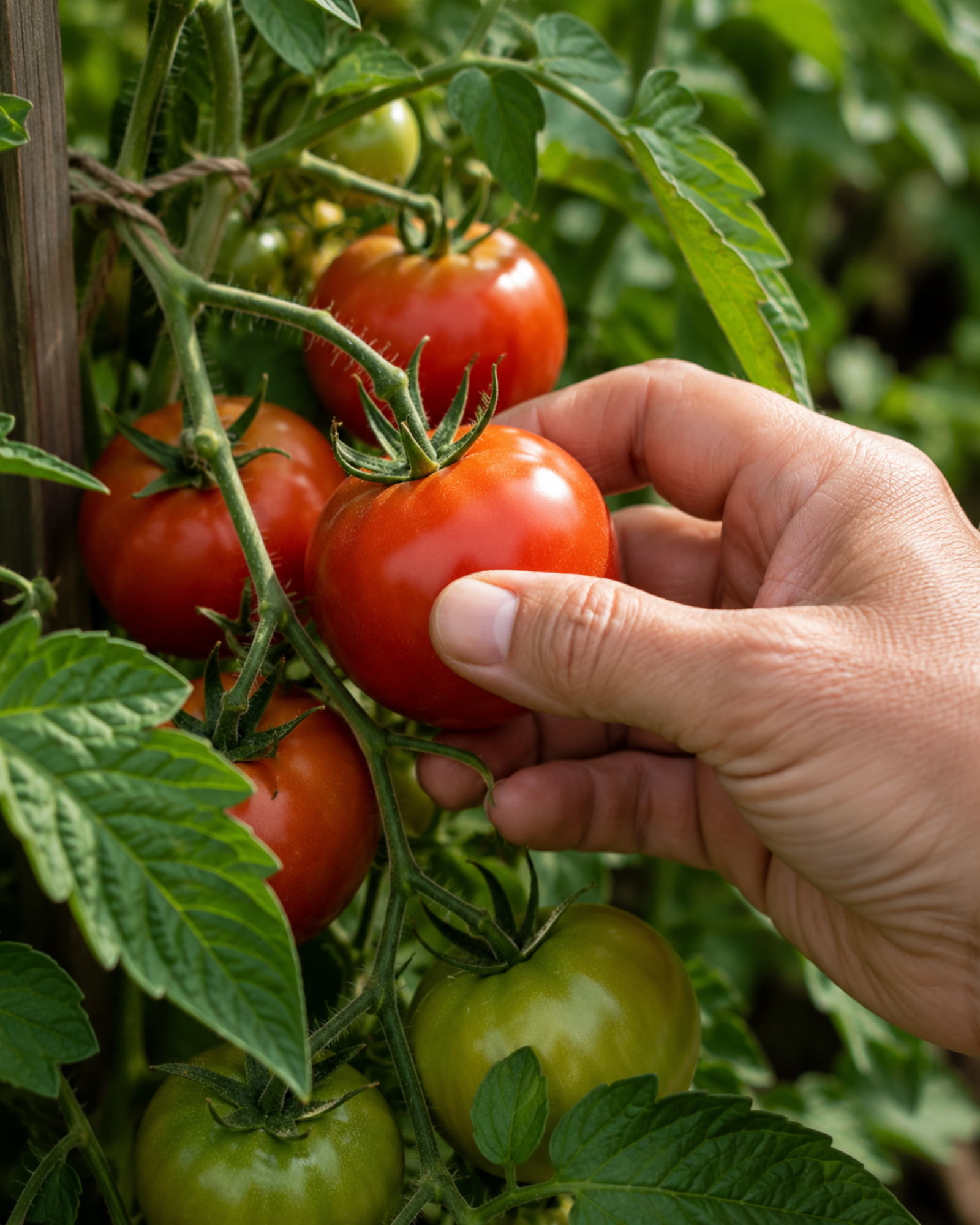
Pick tomatoes when they reach the mature color expected for the cultivar and yield slightly to gentle pressure. Before frost, collect full-sized mature-green tomatoes and allow them to ripen indoors at room temperature.
Keep ripe, whole tomatoes in a single layer away from direct sunlight and use them promptly. Brief refrigeration can slow softening but may reduce flavor. Allow refrigerated whole tomatoes to return to room temperature before eating. Refrigerate cut tomatoes promptly in a covered container.
Common problems
Blossom-end rot
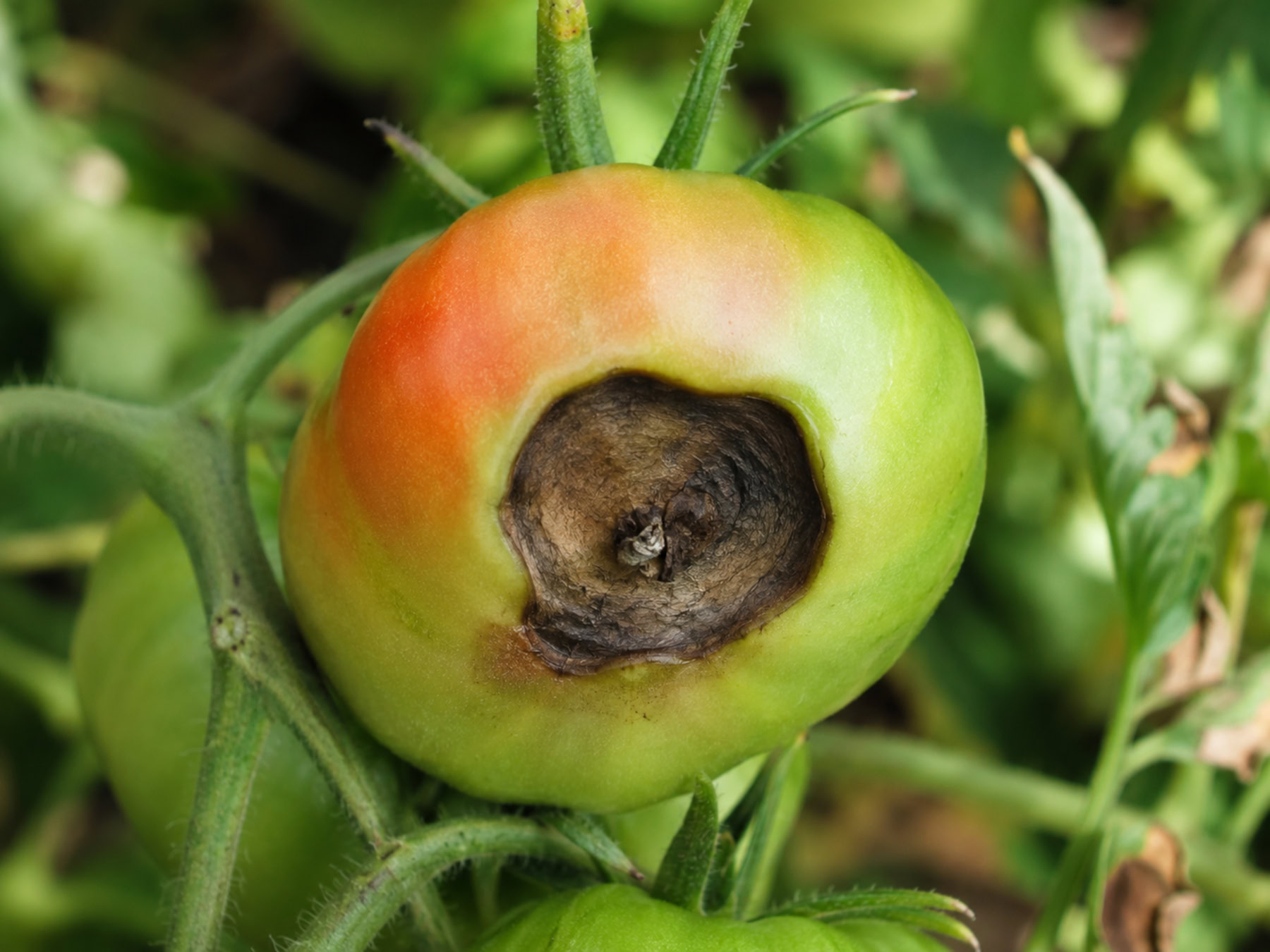
A dark, sunken, leathery patch develops at the blossom end of the fruit. The affected fruit will not recover. The disorder means that too little calcium reached the developing fruit, but the soil itself is not always deficient in calcium. Uneven moisture, root damage, and excessive fertilizer can interrupt calcium movement.
Remove affected fruit, maintain consistent soil moisture, apply mulch, and test the soil before adding calcium.
Fruit cracking
Radial or circular cracks often develop after heavy rain or irrigation follows a dry period. Maintain consistent moisture, apply mulch, and pick nearly ripe fruit before prolonged heavy rain where cracking is a recurring problem.
Leaf spots and blights
Early blight often begins on lower leaves as brown spots with target-like rings. Septoria leaf spot usually causes many smaller spots with pale centers and dark margins. Remove affected lower leaves, keep the foliage dry, apply mulch, improve spacing, and avoid handling wet plants.
Large, rapidly expanding dark or water-soaked blotches during cool, wet weather may indicate late blight, especially if white growth develops under humid conditions. Seek local confirmation promptly. Do not treat every brown leaf as late blight or apply a general treatment without identifying the problem.
Aphids and whiteflies
Check young growth and the undersides of leaves for insects, sticky honeydew, and distorted growth. A strong stream of water can remove small aphid colonies. Insecticidal soap, horticultural oil, or biological controls may help, but use only products labeled for tomatoes and the identified pest. Follow all label directions and preharvest intervals.
Growing nearby and crop rotation
Basil, marigolds, and low-growing leafy crops can share the bed if they do not shade the tomatoes or restrict airflow. Some studies suggest that basil or marigolds may reduce certain pests, but companion plants do not replace monitoring and sound growing practices.
Rotate tomatoes and related nightshade crops out of the same bed for three to four years where space allows.
Safety
Ripe tomato fruit is edible. The leaves and stems are not food. Tomato foliage and unripe fruit contain higher concentrations of tomatine than ripe fruit and are toxic to dogs and cats. Ingestion may cause vomiting, weakness, and other serious symptoms.
Keep pruned plant material away from animals. Contact a veterinarian or animal poison-control service after significant ingestion.
Sources
The cultivation, spacing, disease, storage, and safety guidance was independently written after consultation of the following materials.
- University of Minnesota Extension. Growing tomatoes in home gardens
- University of Minnesota Extension. Irrigation strategies for vegetables
- University of Minnesota Extension. Companion planting in home gardens
- University of Illinois Extension. Tomato
- University of Maryland Extension. Growing tomatoes in a home garden
- University of Maryland Extension. Key to common problems of tomatoes
- Colorado State University Extension. Growing Tomatoes
- NC State Extension. Solanum lycopersicum
- ASPCA. Pets and Produce: Top Tips for Vegetable Garden Safety
Content verification date: July 12, 2026.
Photo guide
Step-by-step photographs for growing tomatoes.